
Oyster Cards London: How to Get, Top Up, Check Balance and Claim a Refund
Oyster cards offer a simple and convenient way to travel around London. Just add money to your card, tap it on the yellow reader when travelling, and enjoy your journey. You don’t need to buy paper tickets or calculate fares yourself. The system works out the correct fare for your journey, helping you manage your travel costs.
Whether you live in London or are visiting for the first time, this guide will help you understand how Oyster cards work. You’ll learn how to get an Oyster card online, create and manage your Oyster account, and top up your card when needed. We’ll also explain how to check your Oyster card balance, understand travel fares, and request a refund when you no longer need your card.

What Is an Oyster Card?
An Oyster card is a blue smartcard used to pay for public transport in London. You can add money to the card and tap it on a reader to pay for your journey. This makes travelling easier because you don’t need to buy paper tickets or work out the fare yourself.
If you’re looking for information about an Oyster card UK, it’s important to know that it is designed for travel in London, not other UK cities. You can use Oyster cards on the Tube, buses, trams, DLR, Elizabeth line, London Overground, and most National Rail services. They are also accepted on the Thames river bus and London Cable Car, but not on the Heathrow Express.
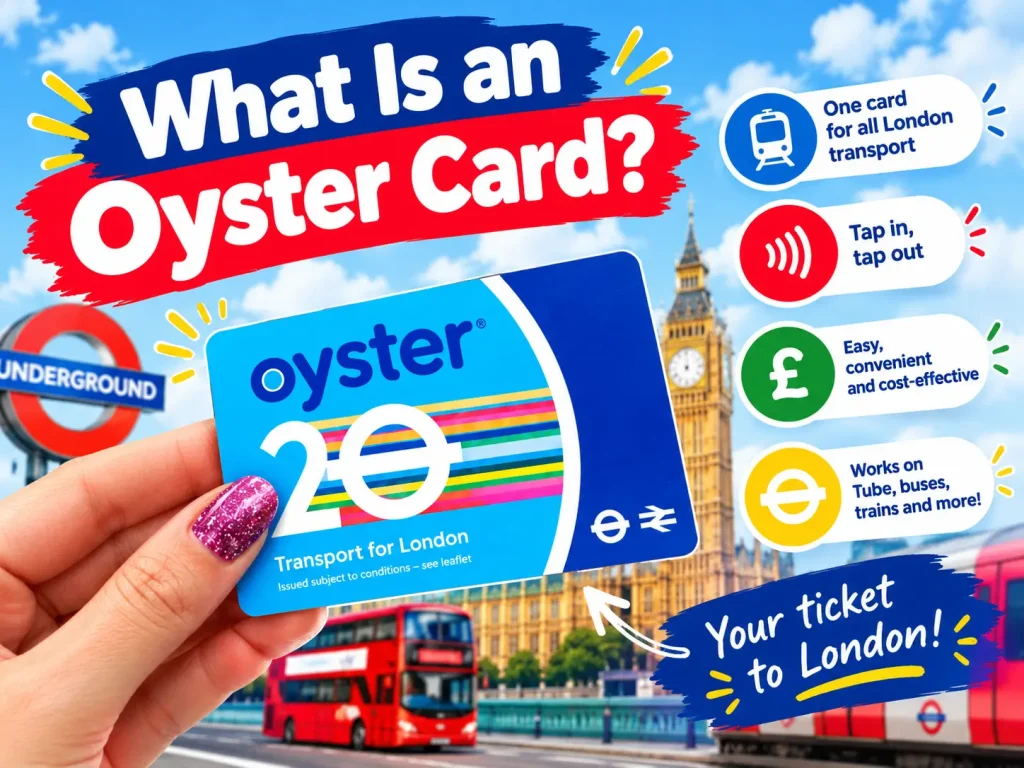
Using an Oyster card is straightforward. On the Tube, DLR, London Overground, Elizabeth line, and rail services, tap your card on the yellow reader when you enter and leave. This helps ensure you pay the correct fare. On buses and trams, you only need to tap your card when you get on.
Here are a few useful things to know about Oyster cards:
How to Get an Oyster Card
Getting an Oyster card is simple, and a standard card does not require a complicated Oyster card application. You don’t need to provide a photo or personal information. Just buy the card, add credit, and use it to pay for your journeys. The best way to get one depends on whether you live in the UK or are visiting London.
Buy Online or at a Station
Buying an Oyster card online is a convenient choice if you live in the UK and want the card delivered to your home. Visitors can order a Visitor Oyster card online before travelling to London. Ordering in advance helps you avoid queues when you arrive. However, Visitor Oyster cards are not sold at the airport, so make sure you order yours ahead of time.
If you are already in London, you can buy a standard Oyster card from several locations, including:
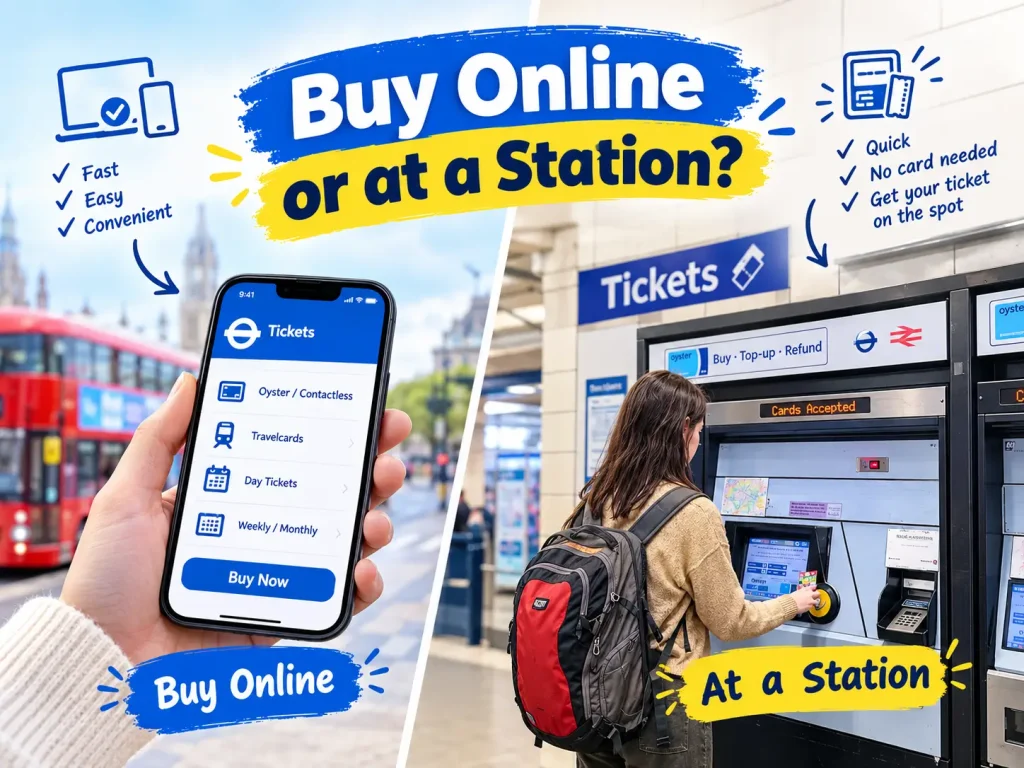
You must pay a non-refundable fee for the card. Check the TfL website for the latest price. Once you have your card, add pay-as-you-go credit and you can start travelling.
Oyster Photocard
An Oyster photocard includes your photograph and offers free or discounted travel to eligible groups. Unlike a standard Oyster card, you must apply for it online. These cards are mainly available to people who live in London.
The main types include:
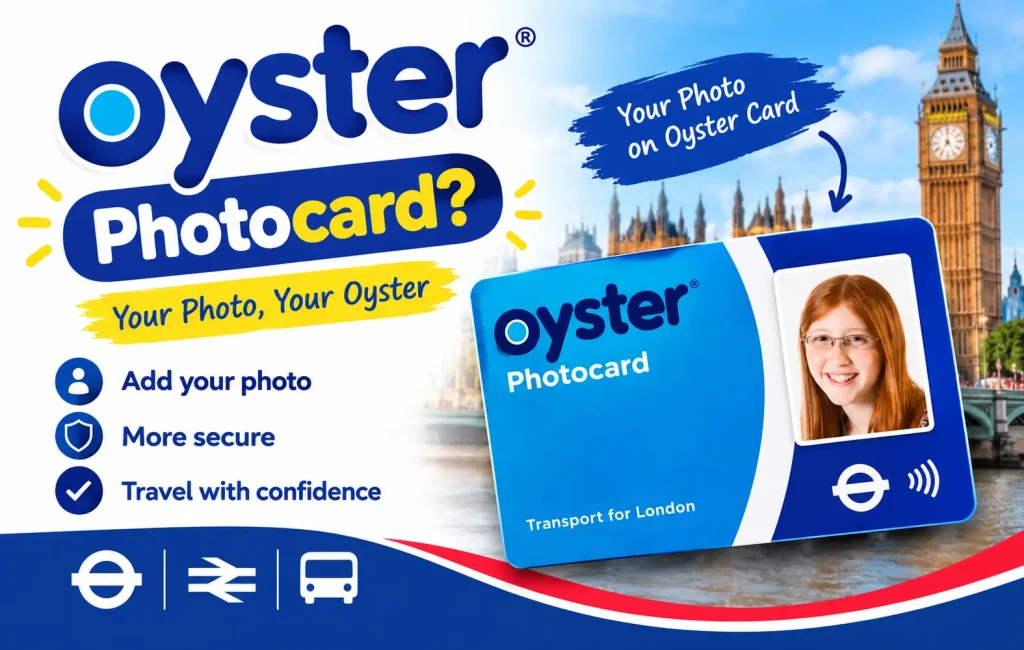
Some photocards require an application fee, and you may need to provide proof of your age or address. Visit the TfL website for the latest application requirements.
If you are visiting London with children aged 11 to 15, you do not need to apply for a photocard to get the Young Visitor discount. A member of staff at a Tube station or TfL Visitor Centre can add this discount to a standard Oyster card for up to 14 days.
Your Oyster Account and TfL Online Account
You can use an Oyster card without creating an account. However, setting up a free Oyster account gives you more ways to manage your travel. Transport for London (TfL) provides an online account for Oyster and contactless payments. It is also known as a TfL Oyster account or TfL online account.
With an account, you can:
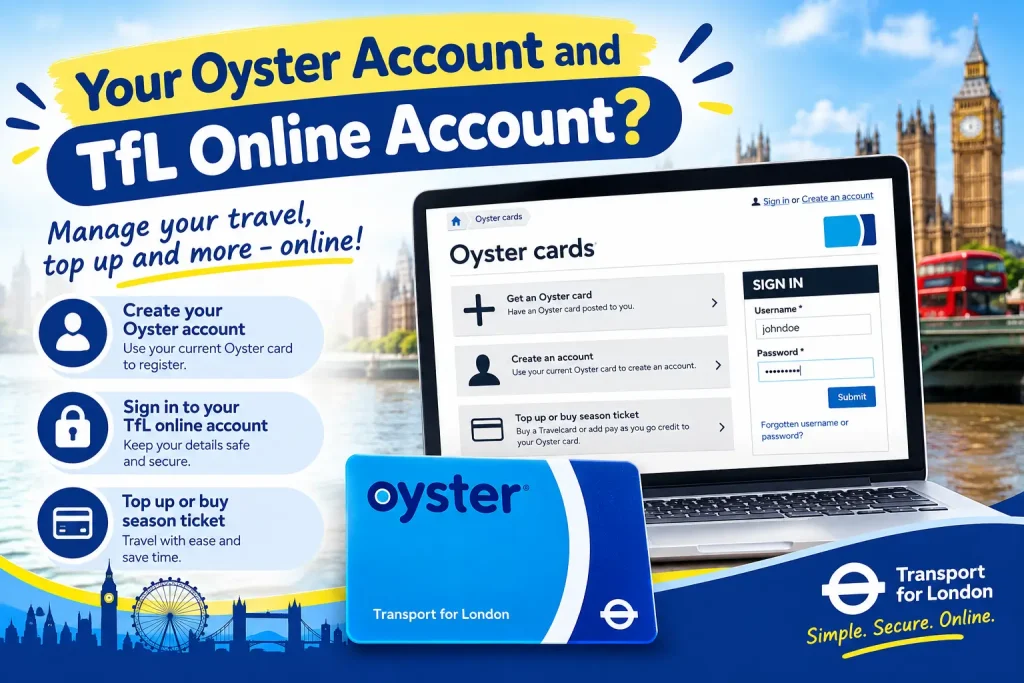
Please note that Visitor Oyster cards cannot be registered online. You can check the balance and add credit at station ticket machines. If you use a contactless bank card, you can also view up to seven days of journey history on the TfL website without creating an account.
How to Register
Creating an Oyster account takes just a few minutes. Follow these steps:
Visit the official TfL website and select the option to create an account.
Enter your details and choose a password.
Add your Oyster card number to the account.
Log in whenever you want to check your balance or journey history.
How to Login
Visit the official TfL website and sign in using your email address and password.
Once logged in, you can top up your card, check previous journeys, or report a lost card.
If you cannot remember your password, use the password reset option on the login page.
TfL also provides information about the security measures used to protect your account.
How to Top Up Your Oyster Card
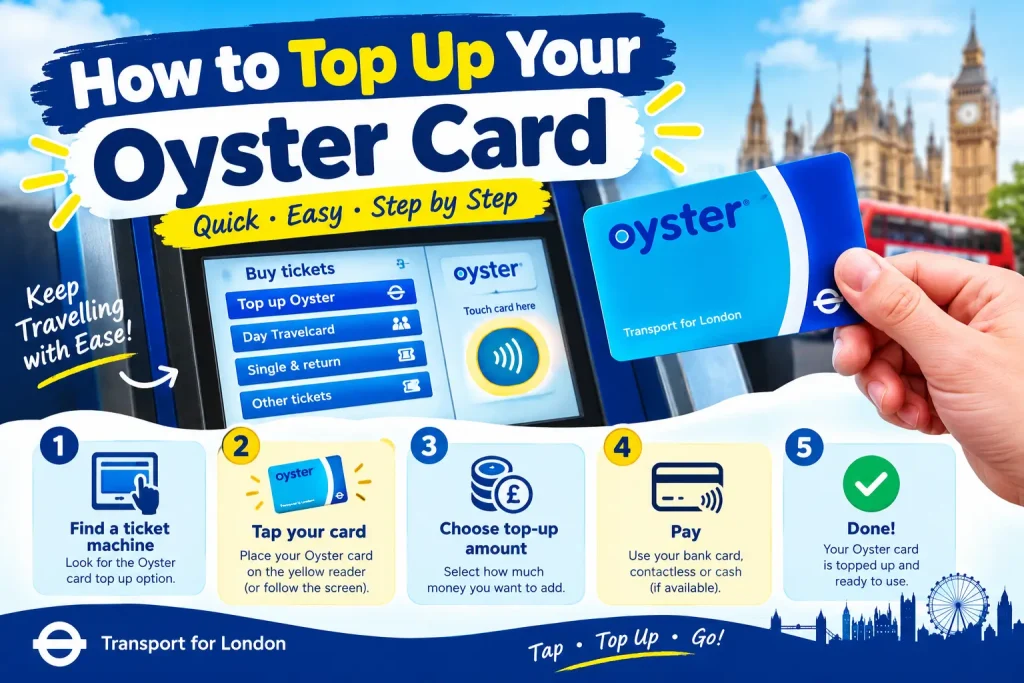
To travel using an Oyster card, you need to have enough credit available. Topping up your Oyster card is simple, and you can choose from several methods depending on what works best for you.
At a station: You can add credit using ticket machines at Tube stations. Touch your card on the reader, select the amount you want to add, and make your payment. This is a convenient option when you are already at a station or using a Visitor Oyster card, which can only be topped up at station machines.
Online or through the app: If you have a free Oyster account, you can add credit through the TfL website or TfL Go app. You can also arrange automatic top-ups to add credit when your balance gets low.
At a local shop: Many shops and newsagents across London operate as Oyster Ticket Stops. Look for the Oyster sign in the shop window, give your card to the staff, and ask them to add credit.
At a TfL Visitor Centre: If you are visiting London and need help, staff at a TfL Visitor Centre can guide you through the process.
How Much Should You Add?
The amount you need depends on how long you plan to stay in London and how often you travel. As a general estimate, TfL suggests around £15 for a two-day visit and £30 for four days. Your Oyster card can only hold a limited amount of credit, so there is no need to add too much at once.
Keep these points in mind:
How to Check Your Oyster Card Balance
It’s a good idea to check your Oyster card balance before starting your journey. This helps you make sure you have enough credit for your travel. Checking your balance is quick and easy, and there are several ways to see how much money is left on your Oyster card.
At a Tube station: You can check your balance using a ticket machine at any Tube station. Simply touch your Oyster card on the reader, and the remaining credit will appear on the screen. This method works with all types of Oyster cards, including Visitor Oyster cards, and is useful if you don’t have an online account.
Online or through the app: If your Oyster card is linked to a free Oyster account, log in through the TfL website or TfL Go app. You can view your balance and recent journeys in one place. You can also add credit without visiting a station.
At a TfL Visitor Centre: If you need assistance, staff at a TfL Visitor Centre can help you check your balance and understand how to use your card.
Which Option Is Best for You?
|
Your situation |
Best way to check |
|
You have a registered Oyster card |
Log in online or use the TfL Go app |
|
You have a Visitor Oyster card |
Check at a station ticket machine |
|
You need face-to-face assistance |
Visit a TfL Visitor Centre |
Keep in mind that a Visitor Oyster card cannot be registered online, so you’ll need to use a station ticket machine to check its balance.
A Few Useful Tips
Oyster Card Prices and Fares
The cost of travelling with an Oyster card depends on your destination, travel time, and the type of transport you use. You don’t need to calculate the fare yourself because the system works it out when you tap your card. Here’s a simple explanation of how Oyster card prices and fares work.
What Affects the Price?
One important exception is Heathrow Airport, where journeys are charged at peak rates throughout the day.
The Daily Cap: A Way to Limit Your Costs
The daily cap helps you manage your travel expenses. Once your eligible Tube and rail journeys reach the daily spending limit, you won’t pay extra for further eligible journeys during that day. This can be useful if you plan to visit several places around London. Thames river bus journeys are charged separately and do not count towards the daily cap.
You can also benefit from the Hopper fare on buses. After tapping in for your first bus journey, you can change to other buses for free within one hour.
Travelling Every Day? Consider a Monthly Pass
If you travel regularly, a monthly Oyster card option may cost less than paying for each journey separately. You can purchase a Travelcard or Bus & Tram Pass and add it to your Oyster card through the official TfL online shop. Students studying in London may also qualify for discounted season tickets with a Student Oyster photocard.
Prices at a Glance
|
What |
Is the price fixed? |
|
Bus and tram journeys |
Yes, a flat fare applies |
|
Tube and rail journeys |
No, fares depend on zones and travel time |
|
Daily cap |
Yes, a maximum daily amount applies |
|
Oyster card itself |
A one-off fee that is non-refundable |
TfL fares can change over time, so check the latest prices before planning your journey.
Oyster Card for Visitors and Tourists
If you’re planning a short trip to London, public transport is a convenient way to explore the city. An Oyster card for tourists makes paying for journeys simple, but you should choose the right card for your travel plans. Here’s what you need to know before arriving in London.
Visitor Oyster Card or Standard Card?
Both cards work in a similar way. You add credit and tap your card to pay for journeys. They offer the same fares and daily caps, but there are some differences in how you get and manage them.
|
Feature |
Visitor Oyster Card |
Standard Oyster Card |
|
Where to get it |
Order online before travelling |
Buy at stations, airports and shops in London |
|
Delivery |
Delivered to your home |
Collect when you arrive |
|
Extra benefits |
Includes a booklet of offers for attractions and restaurants |
No booklet of offers |
|
Online registration |
Not available |
Available |
Choose a Visitor Oyster card if you prefer to arrange your travel before leaving home. It is delivered to your address, allowing you to use it as soon as you arrive in London. You can pay in your own currency when ordering, with your bank converting the payment into pounds. Remember to order in advance because Visitor Oyster cards are not sold at airports.
Choose a standard Oyster card if you want to buy one after arriving in London. You can purchase it from ticket machines at Tube and train stations, including those at Heathrow, Gatwick, Stansted and London City airports.
Topping Up and Checking Your Balance
You cannot register a Visitor Oyster card online, so you need to use station ticket machines to add credit and check your balance. As a general guide, TfL suggests around £15 for a two-day visit and £30 for four days.
Travelling with Children
Children under five travel free. Children aged 5 to 10 can travel free on most services when accompanied by a paying adult. If you visit London with children aged 11 to 15, ask a member of staff at a Tube station or TfL Visitor Centre to add the Young Visitor discount. This provides half-price adult fares for up to 14 days.
Other Questions Visitors Often Ask
Student Oyster Card (18+)
If you study in London and travel regularly, a Student Oyster card can help reduce your transport costs. Officially known as the 18+ Student Oyster photocard, it is designed for eligible students aged 18 and over who study in London.
What Benefits Do You Get?
The main advantage is a discount on season tickets. With an 18+ Student Oyster photocard, eligible students can receive up to 30% off Travelcards and Bus & Tram Passes. This can help you save money if you travel around London regularly for classes, work, or social activities. It is a useful student travel card for everyday journeys throughout the academic term.
Who Can Apply?
Please note that this discount is for eligible students studying in London. If you are visiting from another city or country as a student, you cannot apply for this card. You will need to pay standard adult fares, making a standard or Visitor Oyster card a suitable option for a short visit.
How to Use It
Apply for the photocard through the official TfL website. Once you receive it, you can purchase a discounted Travelcard or Bus & Tram Pass and add it to your card. You can then tap in and out as you travel. Keep your photocard safe because it is linked to your student discount.
Quick Tips
Oyster Card for Kids and Teens (Zip Oyster)
Travelling around London with children is easier when you know which travel options are available for each age group. Some children travel free, while older kids and teenagers may need their own card or qualify for discounted fares. This guide explains how to choose the right Oyster card for kids.
Children Under 5 and Ages 5 to 10
Children under five can travel free on all TfL services, so they do not need an Oyster card. Children aged 5 to 10 can travel free on the Tube, DLR, and London Overground when accompanied by a paying adult. Each adult can take up to four children. If a child in this age group travels alone, they need a 5–10 Zip Oyster photocard.
Oyster Card for an 11-Year-Old
When your child turns 11, their travel options change. If they live in London, you can apply online for an 11–15 Zip Oyster photocard. It provides free bus and tram travel, along with discounted child fares on the Tube and rail services. This can be a useful option for school journeys and regular travel. Each child must have their own card, as Oyster cards cannot be shared.
Visiting London with Children Aged 11 to 15
If you are visiting London for a short stay, your child does not need a photocard to receive a discount. Ask a member of staff at a Tube station or TfL Visitor Centre to add the Young Visitor discount to a standard Oyster card. This provides half-price adult fares for up to 14 days, helping families save on travel during their visit.
Oyster Card for a 16-Year-Old
Teenagers aged 16 and 17 who live in London can apply for a 16+ Zip Oyster photocard. It offers discounted travel compared with standard adult fares and can be useful for travelling to college, part-time jobs, and other activities. Teenagers visiting London are not eligible for this discount and generally pay standard adult fares.
Quick Guide by Age
|
Age |
What Your Child Needs |
|
Under 5 |
No card needed; travel is free |
|
5 to 10 |
No card when travelling with an eligible adult, or a Zip photocard if travelling alone |
|
11 to 15 |
An 11–15 Zip photocard or the Young Visitor discount |
|
16 to 17 |
A 16+ Zip photocard for eligible London residents |
Tips for Parents
Freedom Pass for Over 60s and Disabled Residents
London offers special travel passes that provide free or discounted travel for older people and residents with disabilities. The Freedom Pass is a popular option for eligible residents, while the 60+ London Oyster photocard is available to people who have not yet reached state pension age. These passes are for eligible London residents, not visitors.
60+ London Oyster Photocard
The 60+ London Oyster photocard is available to London residents aged 60 or over who have not yet reached state pension age. It provides free travel on most TfL services within Greater London. An application fee applies, along with a small annual fee to confirm that you still live at your registered address.
Here are the main free travel times to remember:
Older Person’s Freedom Pass
Once you reach state pension age, your 60+ London Oyster photocard is replaced automatically by an Older Person’s Freedom Pass. It offers similar travel benefits, so you do not need to make a separate application for the replacement. This is the pass people usually mean when searching for a Freedom Pass.
Disabled Person’s Pass
Many people also search for a disabled Oyster card when looking for accessible travel options in London. Travel passes for eligible disabled residents are managed through local borough councils, and the requirements depend on individual circumstances. Visit the official TfL website or contact your borough council to check your eligibility and find out how to apply.
Who Cannot Apply?
The 60+ London Oyster photocard and Freedom Pass are available to eligible London residents. If you are visiting from another UK city or another country, you cannot apply for these passes. You can use a standard Oyster card or Visitor Oyster card for your journey instead.
Quick Tips
Oyster Card vs Contactless: Which Is Better?
When travelling around London, you can pay with an Oyster card, a contactless bank card, or a mobile wallet on your phone or watch. All three options work in a similar way: tap the yellow reader, and the fare is charged automatically. The best choice depends on your travel needs, available discounts, and how long you plan to stay in London.
What Is the Same?
Always tap correctly when required, as missing a tap can result in a higher fare.
When Is an Oyster Card Better?
When Is Contactless Better?
Quick Comparison
|
Feature |
Oyster Card |
Contactless |
|
Card purchase fee |
Yes, a one-off fee |
No separate travel card needed |
|
Adding credit |
Required |
Not required |
|
Discount photocards |
Available for eligible users |
Not available |
|
Suitable for visitors |
Yes |
Yes, but check for bank fees |
How to Avoid Card Clash
If you keep your Oyster card and bank cards together in one wallet, make sure you tap only the card you want to use. Otherwise, the wrong card may be charged, or you could receive an unexpected charge. Removing the correct card from your wallet before tapping is the safest option.
You can review your journeys using either payment method. Sign in to a free TfL account to access your travel history, or check up to seven days of contactless journey history without an account.
How to Get an Oyster Card Refund
Have you finished your London trip and still have money left on your Oyster card? You may be able to claim the unused balance through an Oyster card refund. The process depends on how much credit remains on your card and which refund method you choose.
Remember, your Oyster credit does not expire. If you plan to visit London again, you can keep your card and use the remaining balance on your next trip. Otherwise, you can follow the steps below to request a refund.
What Can You Get Back?
You can request a refund for the unused pay-as-you-go credit on your Oyster card. However, the purchase fee for the card is non-refundable. If you have an older Oyster card and believe you paid a deposit, check the TfL website for the rules that apply to your card.
Refund at a Ticket Machine
If your remaining balance is £10 or less, a Tube station ticket machine may be the quickest option. Touch your card on the reader and follow the available refund instructions. For eligible small balances, the refund can be processed at the machine. You can also visit a TfL Visitor Centre for assistance, where refunds may be available in cash or returned to your debit or credit card.
Refund Online
An online refund is useful if you have already left London or have a larger balance. Visit the official TfL website and complete the refund form. You will need your Oyster card details and the required bank or payment details to receive your money.
Refund by Phone or Post
You can contact TfL customer services to ask about a refund. Keep your card number, address, and bank details ready, as you may be asked to provide them. TfL may also ask you to return your card by post.
Alternatively, send your Oyster card to TfL with your contact information, including your name, address, email address, and phone number. The refund is sent by cheque, and your card will not be returned.
Visitor Oyster Card Refunds
You can also request a refund for a Visitor Oyster card through the available ticket machine, Visitor Centre, online, phone, or postal methods. If you have already returned home, the online process may be more convenient because Visitor Oyster cards cannot be registered to an online account.
Things to Check Before Requesting a Refund
Oyster Card FAQs
Conclusion
An Oyster card is an easy way to travel around London. Simply add credit to your card, tap in and out when required, and pay the correct fare. Daily fare caps can also help you manage your travel costs. Whether you are a tourist, student, parent travelling with children, or regular commuter, you can choose an option that meets your needs, such as a standard Oyster card, Visitor Oyster card, or a discounted photocard. Before travelling, check the latest fares and travel rules on the official TfL website. You can also use our guides to top up your card, check your balance, or request a refund. Choose the right Oyster card, add credit, and enjoy travelling around London.

Rameez Javed
Rameez Javed runs Oyster Cards, an independent guide to travelling around London. He writes simple, step-by-step help on Oyster cards, top ups, fares and refunds, using information from Transport for London (TfL). This site is not affiliated with TfL.